

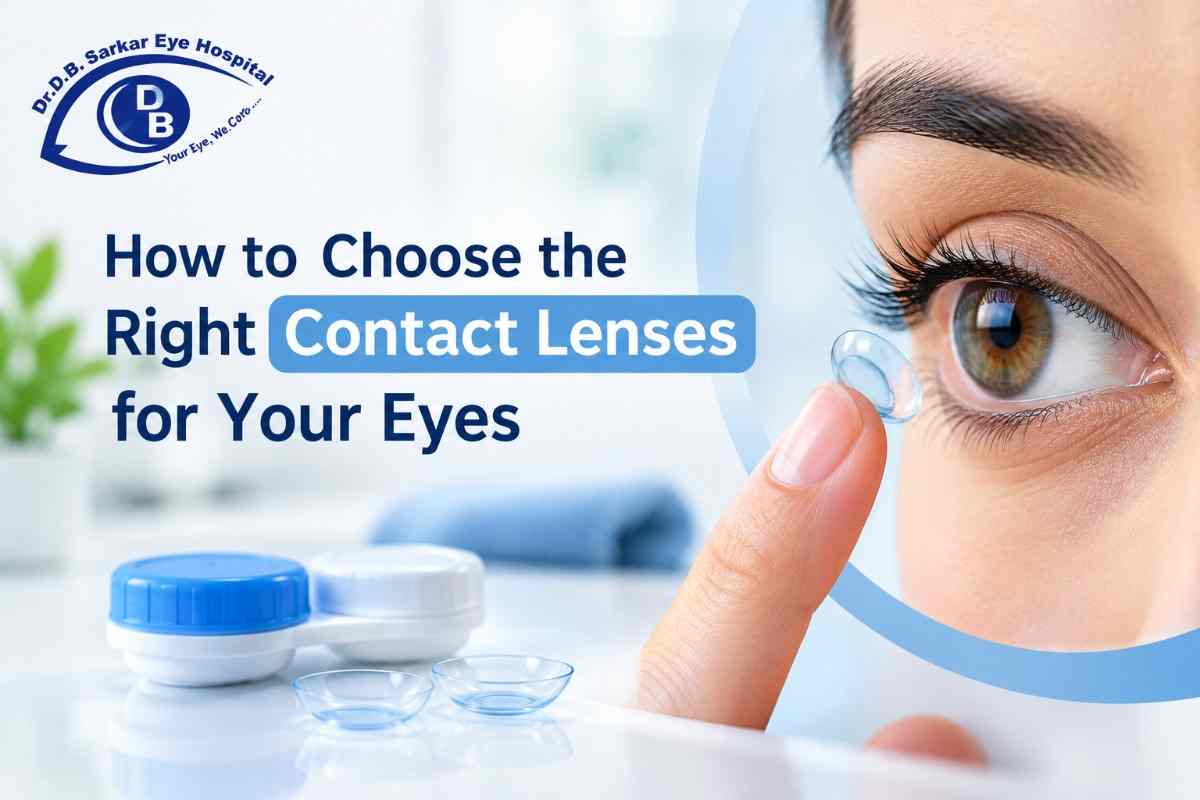
How to Choose the Right Contact Lenses for Your Eyes
Start With an Eye Exam, Always.
Skip this step and everything else falls apart.
A proper contact lens fitting isn't just a vision test. Fitting contact lenses requires serious medical precision. An optometrist maps out the exact curvature of the cornea. They deeply analyze the underlying quality of the tear film and measure the pupil. These specific metrics make a massive difference. They determine whether a lens rests smoothly or scrapes painfully against the eye all day long. This level of professional testing is absolutely crucial for patients living in India. Daily exposure to thick dust, severe pollution, and freezing office air-conditioning is completely unavoidable. Because of this harsh environment, severe dry eye cases are everywhere. A breathable lens designed for a humid, low-pollution coastal town will inevitably fail elsewhere. Dropping that exact same lens into a dry, polluted Delhi winter guarantees a miserable, scratchy experience.
Get a prescription. Get it renewed yearly. Don't reuse an old one because "the number probably hasn't changed."
Know Your Options: Types of Contact Lenses
Once you have a prescription, the real decision-making begins. Here's what's actually available and where each one fits:
-
Soft contact lenses — the most common type, made from flexible, water-containing material. Comfortable from day one, easy to adapt to, and the default choice for most first-time wearers in India.
-
Daily disposable lenses — worn once and thrown away. Zero cleaning, minimal infection risk, ideal for people with dusty commutes or irregular schedules. Slightly pricier per lens, but you skip buying solution altogether.
-
Weekly or bi-weekly lenses — a middle ground. Reusable for a short stretch, need daily cleaning, and demand more discipline than daily wear.
-
Monthly disposable lenses — the most budget-friendly option long-term. Great if you're consistent with lens care and won't forget to clean the case. Bad idea if you're the sort who "sometimes" cleans things.
-
RGP (Rigid Gas Permeable) lenses — harder, more durable, and often prescribed for specific conditions like keratoconus or high astigmatism. They take longer to get used to but offer sharper vision for certain eye conditions.
-
Toric lenses — specifically designed for astigmatism. A regular soft lens won't correct astigmatism properly; toric lenses have a different curve structure to sit correctly on an irregular cornea.
-
Multifocal lenses — for presbyopia, usually relevant once you're past your early 40s and need help with both distance and near vision. Increasingly common as India's contact-lens-wearing population ages alongside a genuinely digital lifestyle.
-
Colored contacts (cosmetic lenses) — these change eye color, with or without vision correction. Popular during festivals, weddings, and photoshoots. And this is exactly where most damage happens.
The Colored Contacts Problem in India
Let's be blunt about this one.
Cheap cosmetic lenses carry hidden dangers. Purchasing colored contacts from local festival stalls or roadside kiosks is incredibly risky. Unverified online sellers push these items without requiring a proper doctor's prescription. People mistakenly treat them as harmless everyday accessories. However, the Indian government views them very differently. Every single contact lens is legally categorized as a medical device. This strict rule applies perfectly to zero-power cosmetic versions as well. The CDSCO actively regulates these products under the Medical Devices Rules of 2017. Bypassing these official safety standards puts long-term eye health in serious jeopardy. That means they're legally treated the same way as any other medical device. A lens without proper fitting, made from questionable material, sitting on your cornea for six hours at a wedding, is a real way to end up with a corneal infection or ulcer.
If you want colored lenses, get them from a licensed optical store, get fitted properly, and don't buy them off a stall next to the bangles and diyas.
Matching Lenses to Your Lifestyle
This is where a lot of buying decisions go wrong. People pick lenses based on price alone, ignoring how they actually live day to day.
-
Long commutes through dusty roads or heavy traffic? Daily disposables reduce exposure to grime building up on a reused lens.
-
Desk job under AC all day? Look for silicone hydrogel lenses — they allow more oxygen through and handle dryness better than older hydrogel materials.
-
Swimmer or someone who showers with lenses on? Stop. Water — pool, tap, or otherwise — carries a parasite risk (Acanthamoeba) that can seriously damage your cornea. Lenses and water don't mix, ever.
-
Frequent traveler, forgetful about solution bottles? Dailies again. One less thing to carry, one less thing to mess up.
-
Sports or active outdoor life? Soft lenses generally stay put better than glasses and won't fog up mid-match.
-
Sensitive or naturally dry eyes? Ask your optometrist about lenses with higher water content or moisture-retention technology specifically.
Contact Lens Care: The Non-Negotiables
Half the problems people face with contact lenses have nothing to do with the lens itself. It's how they're handled.
-
Wash and dry your hands before touching any lens. Every single time.
-
Never top up old solution in the case. Empty it, rinse, refill fresh.
-
Replace your lens case every three months, even if it looks fine.
-
Never use tap water or saliva on a lens. Ever. Not even "just once."
-
Stick to the replacement schedule on the box — daily means daily, not "I'll stretch it to three days."
-
Don't sleep in lenses unless your optometrist has specifically approved an extended-wear type.
-
Remove lenses before swimming, showering, or using a steam room.
-
Never share lenses with anyone. Not even your sibling with a "similar" number.
When to Stop and See a Doctor
Redness that doesn't go away. Persistent discomfort. Blurred vision. Excessive watering or a gritty, sandy feeling that lingers after removing the lens. Don't wait these out. Remove the lenses immediately and get to an eye doctor. Corneal infections can move fast, and delaying by even a day or two can matter.
The Bottom Line
There's no universally "best" contact lens. There's only the lens that fits your cornea, your tear film, your daily grind, and your honesty about how well you'll actually take care of it. Get examined properly, buy from a licensed source, pick based on your lifestyle rather than what's cheapest on the shelf, and treat lens hygiene as non-negotiable — not optional advice you'll get to eventually.
Your eyes don't get a second pair.
Disclaimer
Medical Device & Health Notice: This guide is for informational and educational purposes only and does not replace a professional clinical evaluation. In India, contact lenses (including zero-power cosmetic lenses) are strictly regulated as medical devices by the CDSCO. A poorly fitted lens can cause severe, irreversible corneal damage. Always consult a qualified optometrist or ophthalmologist for a comprehensive eye exam, corneal mapping, and a valid prescription before purchasing or wearing any type of contact lens.