

Hidden Signs of Vision Problems in Children
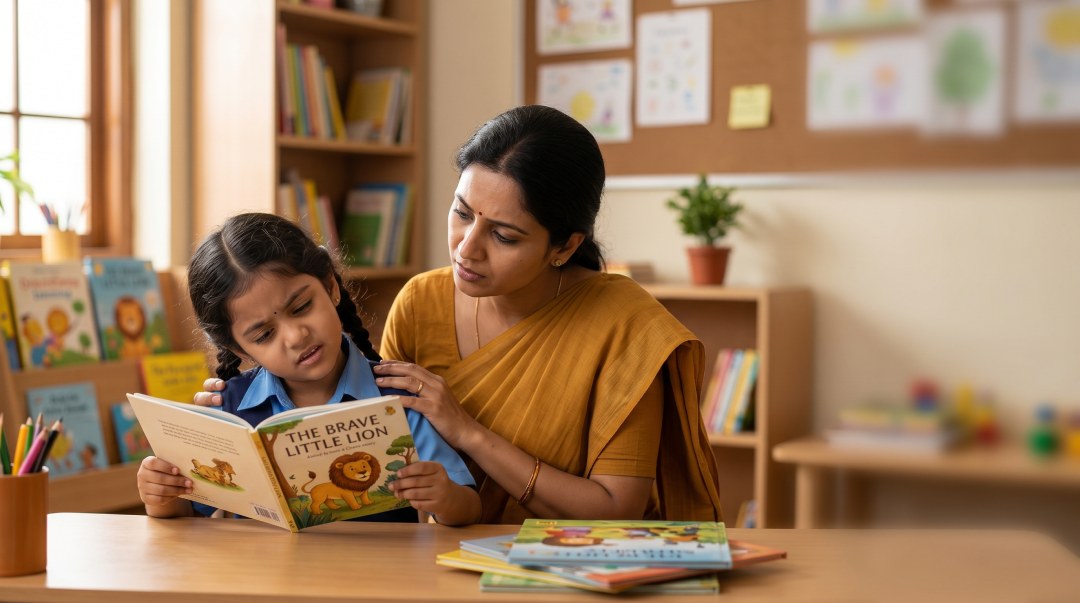
Why Parents and Teachers May Miss Early Vision Signs
Parents usually expect a child with poor vision to say, “I can’t see properly.” But in reality, many children do not realize their vision is abnormal. They may assume everyone sees the same way they do, especially if the problem has been present for a long time or affects only one eye. That is one reason hidden vision problems in children can be easy to miss.
Sometimes the clues do not look like “eye symptoms” at all. Instead, they may show up as trouble reading, low attention during near work, covering one eye, tilting the head, or avoiding activities that need clear vision. Parents and teachers may mistake these signs for tiredness, poor concentration, or lack of interest when the real issue could be a vision problem.
Why vision problems in children are often missed
Children do not always complain because they may not know what normal vision should look like. A child with one strong eye may also function reasonably well for some activities, which can make the problem harder to notice at home. This is why early signs are often subtle rather than dramatic.
Vision problems can also look different depending on the child’s age. Younger children may not explain symptoms clearly, while school-age children may show signs during reading, homework, writing, or screen use. That is why parents need to watch behavior, not just wait for a complaint.
Hidden signs of vision problems in children
One common sign is losing place while reading or using a finger all the time to keep track of words. Another is avoiding reading or close work, even when the child seems bright and curious in other situations. The American Academy of Ophthalmology specifically notes that losing place while reading and avoiding reading can be hidden clues of vision trouble.
Another sign is short attention span during schoolwork or frequent frustration with homework. The problem may not always be attention itself — sometimes a child is struggling because seeing clearly takes extra effort. Vision and learning sources from the American Optometric Association also note that children with vision issues may show reduced concentration, skipping lines, or reading discomfort.
Physical habits can also be important clues. Parents should pay attention if a child:
- squints often
- covers or closes one eye
- tilts the head to one side
- holds books or digital devices very close
- sits too close to the television
- rubs the eyes frequently
- blinks excessively during visual tasks
Some children may complain of headaches or eye strain, especially after reading, writing, or screen use. Others may simply avoid tasks that require visual focus. When this pattern happens repeatedly, it is worth considering an eye examination rather than assuming the child is just tired or uninterested.
Signs that may show up at school
Teachers are often the first to notice hidden vision problems. A child may lose interest in reading, struggle to copy from the board, skip words or lines, complain less but perform inconsistently, or seem to do better when listening than when reading. These signs do not always mean an eye problem, but they are common enough that vision should be considered.
This is one reason vision issues in children can sometimes be confused with learning difficulty, distraction, or lack of confidence. A child may not say “I cannot see.” Instead, the child may say “I don’t like reading” or “homework is too hard.”
What kind of vision problems can cause these signs?
Hidden signs may be related to refractive errors such as nearsightedness, farsightedness, or astigmatism. They can also be linked to eye alignment problems, reduced vision in one eye, or focusing and tracking difficulties that affect reading and close work.
That does not mean every child with reading trouble has an eye problem. But when a child repeatedly shows these visual behaviors, it is reasonable to rule vision in or out with a proper eye examination.
When should parents book an eye exam?
Parents should arrange a proper eye exam if they notice repeated squinting, head tilting, covering one eye, frequent eye rubbing, unusual reading difficulty, or a sudden change in school-related visual behavior. Early evaluation is important because children may not report symptoms clearly on their own.
An eye exam is also important if a teacher has raised concerns, if the child has failed or missed a vision screening, or if there is a family history of significant eye problems. Screening can help identify risk, but it is not the same as a full eye examination.
Why early detection matters
Vision plays a major role in reading, classroom learning, coordination, and everyday confidence. If a child is struggling to see clearly, school and daily activities can become harder than they need to be. This is why spotting hidden signs early can make a real difference for the child and the family.
The good news is that many childhood vision problems can be identified with an eye exam and managed appropriately once the issue is understood. The important thing is not to ignore subtle signs simply because the child has not directly complained.
Conclusion
Hidden signs of vision problems in children often show up through behavior rather than direct complaints. Losing place while reading, avoiding near work, covering one eye, head tilting, eye rubbing, and sitting too close to books or screens may all be clues worth taking seriously. Children do not always know how to describe vision trouble, which is why parents need to watch for patterns.