
Laser Surgery for the Eye: Procedure, Benefits, Cost, Recovery, and Who Should Consider It
What Laser Eye Surgery Actually Does
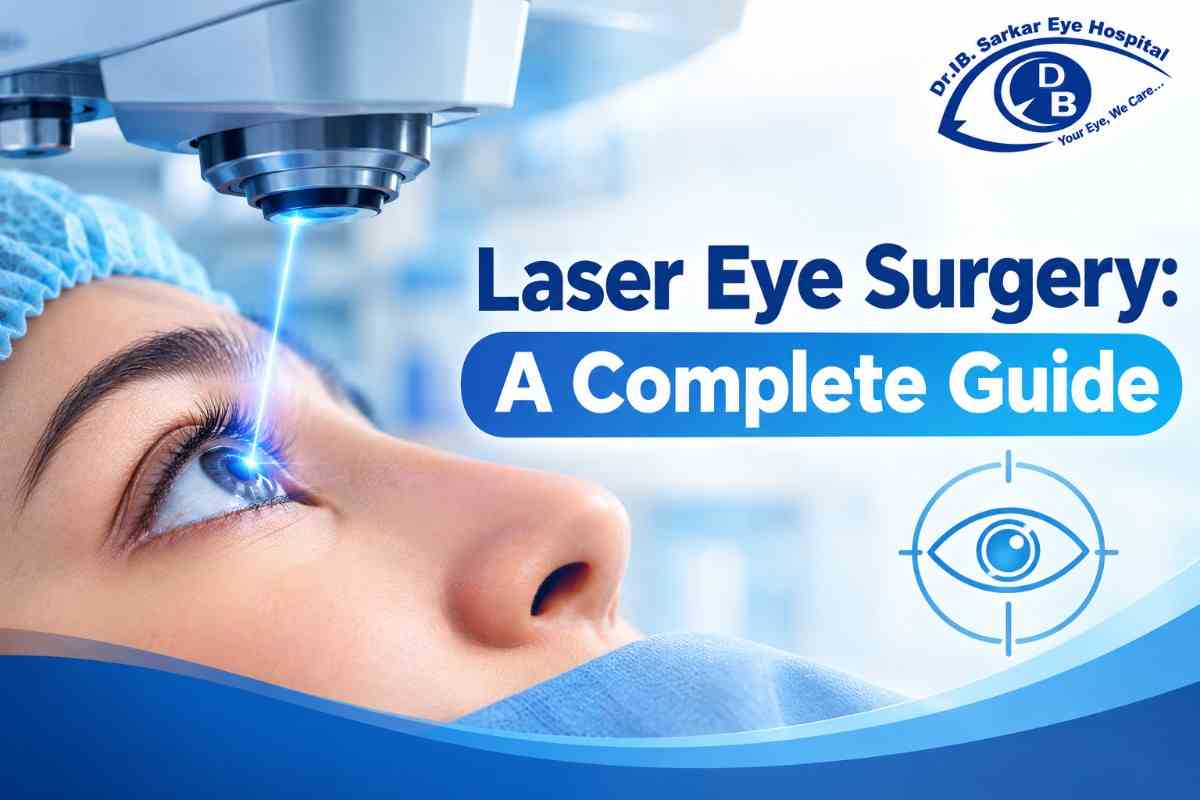
At its core, it's simple: a laser reshapes your cornea so light lands correctly on your retina. That's it.
Numbing drops go in first. You'll feel pressure, not pain. The whole thing takes a few minutes per eye — genuinely short, though it rarely feels that way when you're lying under bright lights wondering if you're blinking too much.
It treats:
-
Myopia (nearsightedness)
-
Hyperopia (farsightedness)
-
Astigmatism
-
Presbyopia, though only partially — through monovision or blended vision approaches, not full correction
The Main Types of Laser Eye Surgery
Not every laser procedure works the same way. The difference comes down to how the surgeon accesses the layer of the cornea that needs reshaping.
LASIK (and Contoura, its topography-guided variant): A thin flap is cut into the cornea, lifted, and the laser reshapes the tissue underneath. The flap goes back in place and starts healing almost immediately. Fast comfort, fast results — but it needs a reasonably thick, healthy cornea to begin with.
SMILE / SILK: A newer, flap-less approach. Instead of lifting a flap, the surgeon creates a tiny keyhole incision — just a few millimetres — and removes a small disc of tissue through it. Less disruption to the eye's surface generally means less dry-eye risk afterward, and a genuinely quick return to function.
PRK / LASEK (surface treatments): Here, the outer layer of the cornea — the epithelium — is removed entirely before the laser gets to work. No flap involved. It heals well but takes longer, and the first few days are noticeably scratchier. This is usually the fallback option for thinner corneas or people in contact sports, where a LASIK flap carries more risk.
ICL (Implantable Collamer Lens): Not a laser procedure at all, technically — no corneal tissue gets reshaped or removed. A biocompatible lens is implanted between the iris and your natural lens instead. It's the go-to option for very high refractive errors or corneas too thin or irregular for laser correction, and it's reversible, which none of the laser methods are.
|
Procedure |
How It Works |
Best Suited For |
Recovery |
|
LASIK/Contoura |
Corneal flap lifted, laser reshapes tissue, flap replaced |
Stable power, adequately thick cornea |
Fast — often clear within 24–48 hours |
|
SMILE/SILK |
Small keyhole incision, no flap |
Dry-eye-prone patients, active lifestyles |
Fast, gentler on the ocular surface |
|
PRK/LASEK |
Surface layer removed and regrown |
Thin corneas, contact sports |
Slower, 5–7 days of discomfort |
|
ICL |
Lens implanted, no tissue removed |
Very high power, thin/irregular corneas |
Quick, minimal pain, reversible |
Is Laser Eye Surgery Safe?
Genuinely, yes — for the right candidate.
Serious complications occur in fewer than 1% of cases, and that figure keeps improving as femtosecond laser technology gets more precise. In the UK alone, over 100,000 procedures happen every year, and satisfaction rates sit above 95%. That's not a marketing number — it shows up consistently across independent clinical sources.
Safety, though, depends heavily on candidacy. It's not a procedure everyone qualifies for, and that's not a technicality — it's the single biggest factor determining outcome.
Laser Eye Surgery Age Limit and Eligibility
Most clinics set the minimum age at 18. Not arbitrarily — your refractive error needs to have been stable for at least a year before surgery, and prescriptions in your teens and early twenties often still fluctuate.
There isn't a hard upper age limit in most cases, but candidacy naturally narrows with age due to other eye changes — cataracts, presbyopia, and general corneal health become bigger factors than age itself.
Good candidates generally have:
-
A stable refractive error for 12+ months
-
A cornea that's thick enough and structurally healthy (commonly 480 microns or more)
-
No active eye disease or infection
-
Realistic expectations — this matters more than people assume
You're likely not a good candidate if you have:
-
Severe or chronic dry eye
-
An unstable prescription
-
Extremely thin or irregular corneas
-
Keratoconus
-
Uncontrolled diabetes
-
Active pregnancy or breastfeeding — hormonal shifts can distort your prescription temporarily
-
Advanced glaucoma or cataracts affecting vision
If laser correction is ruled out for any of these reasons, ICL often becomes the next serious option, since it doesn't touch corneal tissue at all.
Laser Eye Surgery Recovery Time
This is where expectations and reality tend to diverge a little, so here's the honest version.
First 24 hours — Expect burning, itching, or a gritty "something's in my eye" sensation. Normal. Rest matters here more than people give it credit for; most surgeons recommend sleeping it off rather than pushing through discomfort.
24–48 hours — Vision starts improving noticeably. Light sensitivity is common but usually fades within this window.
First week — LASIK and SMILE patients are typically back to near-normal function within a few days. PRK/LASEK patients take longer — closer to 5–7 days — since the surface layer is still regenerating.
First few months — Minor fluctuations in vision, occasional dryness, and mild glare at night can persist. For most people, this settles completely within 1–3 months. In a smaller number of cases, dry eye symptoms linger up to a year before fully resolving.
Common side effects during this window include:
-
Dry eyes — the most frequently reported, managed easily with lubricating drops
-
Glare and halos around lights, especially at night
-
Starbursts around bright light sources
-
Temporary light sensitivity
-
Fluctuating vision as the eye stabilises
None of these are considered abnormal. Nearly everyone experiences at least one of them briefly. The distinction that actually matters is between "brief and expected" and "persistent and worth calling your surgeon about" — and any reputable clinic will walk you through that difference before you leave the operating table.
Laser Eye Surgery Cost in India
Cost varies more than most people expect, and the type of procedure drives most of that variation.
|
Procedure |
Approximate Cost (Per Eye) |
|
Conventional LASIK |
₹20,000 – ₹40,000 |
|
Femtosecond (Bladeless) LASIK |
₹40,000 – ₹70,000 |
|
Contoura Vision LASIK |
₹50,000 – ₹1,35,000 |
|
SMILE / SILK |
₹60,000 – ₹1,60,000 |
|
ICL |
Typically higher than laser procedures; varies by lens type and power |
A few things worth knowing before you commit to a number you saw on a website:
-
Quoted prices often exclude pre-operative tests, medication, and follow-up visits — these can add another ₹10,000–₹25,000 to your final bill
-
Metro cities like Mumbai and Delhi typically run 15–30% higher than Tier-2 or Tier-3 cities
-
Standard health insurance in India usually doesn't cover LASIK unless your refractive error crosses 7.5 dioptres or the surgery is medically necessary rather than elective
-
EMI and financing options are widely available, since most people pay out of pocket
Benefits Worth Weighing
-
Reduced or eliminated dependence on glasses and contact lenses
-
Fast, largely painless procedure
-
Long-term cost savings compared to years of glasses, lens solutions, and replacements
-
High success rates — most reputable centres report 96–98% patient satisfaction
-
Quick return to daily activities for most laser methods
-
A genuinely reversible option (ICL) exists for those who don't qualify for permanent correction
Who Should Actually Consider It
If your prescription has been stable for over a year, your corneas are healthy, and you're tired of the daily glasses-or-lenses routine, you're probably a reasonable candidate worth getting evaluated for. If you have thin corneas, chronic dry eye, or an unstable prescription, don't rule yourself out entirely — ICL or PRK might still work where LASIK wouldn't.
Either way, the answer isn't something a blog post can hand you. A proper pre-surgical evaluation — corneal topography, pachymetry, tear film assessment — is what actually decides candidacy. Everything else is just informed guessing.
Medical & Insurance Disclaimer
Clinical & Financial Notice: The information in this guide is for educational and informational purposes only and does not substitute for professional medical evaluation, diagnosis, or treatment. Refractive surgery eligibility requires specialized diagnostic imaging, including corneal tomography (Pentacam), pachymetry, and dilated fundus examinations performed by a certified ophthalmologist. Pricing estimates and health insurance coverage criteria (such as the standard 7.5-dioptre threshold under IRDAI guidelines) vary significantly by hospital, insurer, and clinical necessity. Always obtain an itemized pre-operative estimate from your treating facility before undergoing surgery.