

Smart Screen Time Rules: Protecting Kids From Myopia in a Digital World
The End of Unlimited Device Access
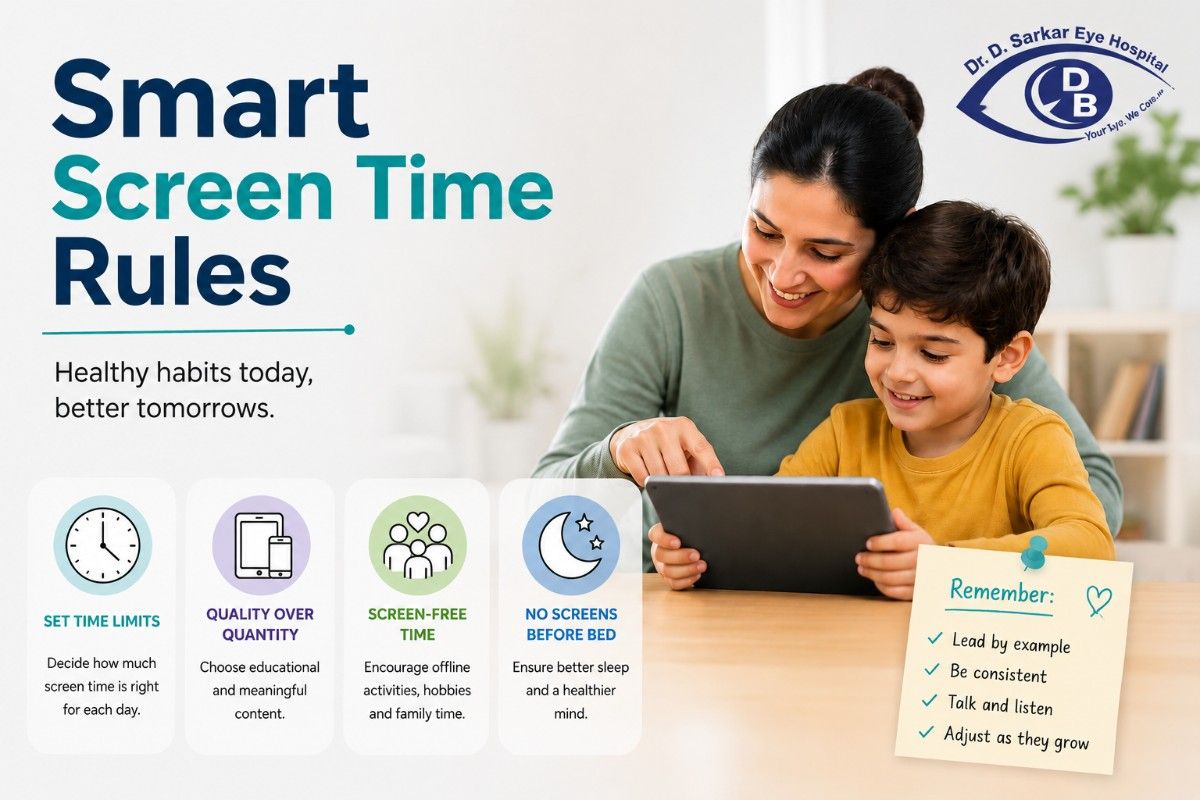
For years, digital entertainment simply acted as a highly convenient babysitter. You would hand over a tablet, and it would occupy the child. That stagnant setup, however, is officially a thing of the past. We have officially entered the Epidemic of Myopia, where digital habits do much more than just entertain toddlers. These daily myopia causes demand strict boundaries. Without them, kids develop high myopia at a young age. They are now actively straining eye muscles, blocking sunlight exposure, and executing dangerous visual shifts entirely on their own. Screen time is no longer just a digital pacifier. It is rapidly becoming the primary driver of vision loss.
How Daily Boundaries Help Defend Vision
The latest breakthroughs prove that vision defense now scales exactly like software limits. Modern solutions for childhood myopia do not require total technology bans or rigid isolation. Instead, they use strategic viewing frameworks to divide and conquer visual stress autonomously. Minimizing digital myopia causes protects the eye. This strategic distance fights off high myopia at a young age.
Here is exactly how these preventive systems function today:
- The Rule-Maker: A core parental boundary evaluates a child's schedule and independently formulates a comprehensive outdoor strategy.
- The Distance: The routine enforces the 20-20-20 rule, explores different offline activities, and systematically reduces visual fatigue without constant human intervention.
- The Environment: Finally, the family compiles its daily habits, analyzes the resulting outdoor time, and drafts a complete wellness routine. Remarkably, some simple strategies on how to prevent myopia have already successfully halted early progression.
The Real Power of Breaks, Distance, and Daylight
Linear screen sessions are completely outdated. The true secret behind preventing high myopia at a young age is the profound ability to run multiple visual breaks simultaneously. To achieve this massive scale, healthy habits rely heavily on light-driven recovery loops. Addressing behavioral myopia causes allows ocular rest. This recovery is vital to prevent high myopia at a young age.
Instead of waiting for one single reading hour to finish, these habits use complex ambient light methodologies. This means they actively relax, reset, nourish, and protect ocular muscles in parallel. If a specific indoor activity fails, the routine instantly pivots. It learns from the fatigue and immediately launches a new outdoor break. Consequently, these ambient light recovery loops perfectly mirror the absolute best visual hygiene pipelines. But crucially, they operate at a speed and scale no continuous screen session could ever match. No manual digital focus can realistically keep up with that outdoor output.
Why Families and Schools Must Set Better Rules
This radical shift extends far beyond pediatric advice. It is already reshaping how real households make daily decisions. For modern parents, school teachers, and digital wellness coaches, identifying exact myopia causes is about to completely redefine technological integration. Tracking these myopia causes empowers families. Strict limits dramatically reduce high myopia at a young age.
- Habit Tracking: Smart apps can actively synthesize thousands of viewing sessions. They can test multiple screen limits in parallel. They can then deliver a finalized usage report while you sleep.
- Routine Development: Parents can aggressively use these boundaries to test daily schedules continuously. They can run outdoor blocks at scale. They can also discover eye rubbing in real time, before doctors ever see them.
- Wellness Strategy: Schools can seamlessly deploy rules to analyze digital usage in depth. These policies can automatically generate massive, data-backed recess clusters. They turn raw screen data into publish-ready plans on how to reduce myopia.
Redesigning Digital Habits for Healthier Eyes
The barrier to entry for healthy vision habits has fundamentally dropped to zero. Any household with access to these outdoor spaces can now run protection loops that once required expensive medical interventions. Eliminating environmental myopia causes takes immediate action. Start setting rules to block high myopia at a young age. Parents who still rely on tablets to manually pacify kids will fall behind. Those that only prompt basic screen warnings will also be severely outpaced. It is time to aggressively audit your current daily workflows. Start integrating the 20-20-20 rule into your daily operations today. Embrace the immediate shift from limitless scrolling to full habit automation, and let your new rules rapidly safeguard your child's eyes.
Disclaimer
This article shares general lifestyle strategies on how to prevent myopia, but it should not be treated as a clinical prescription. Screen rules, outdoor time, and visual hygiene may reduce risk, yet they do not guarantee prevention. Children with blurred vision, eye strain, or rapid prescription changes should be examined by an eye care professional.
While every effort is made to keep the information in this article accurate and current, it is intended for general educational purposes only. Dr. D.B. Sarkar Eye Hospital does not accept responsibility for actions taken based solely on this content. For personalised advice regarding your eye health, please consult our eye care specialists in Cooch Behar.